
Field Operations
GPS Route Tracking For Service Vans Without Micromanaging
2 min readJobOpsPro
Route tracking works best when it is used to protect the schedule, not to police technicians. Here is the difference.
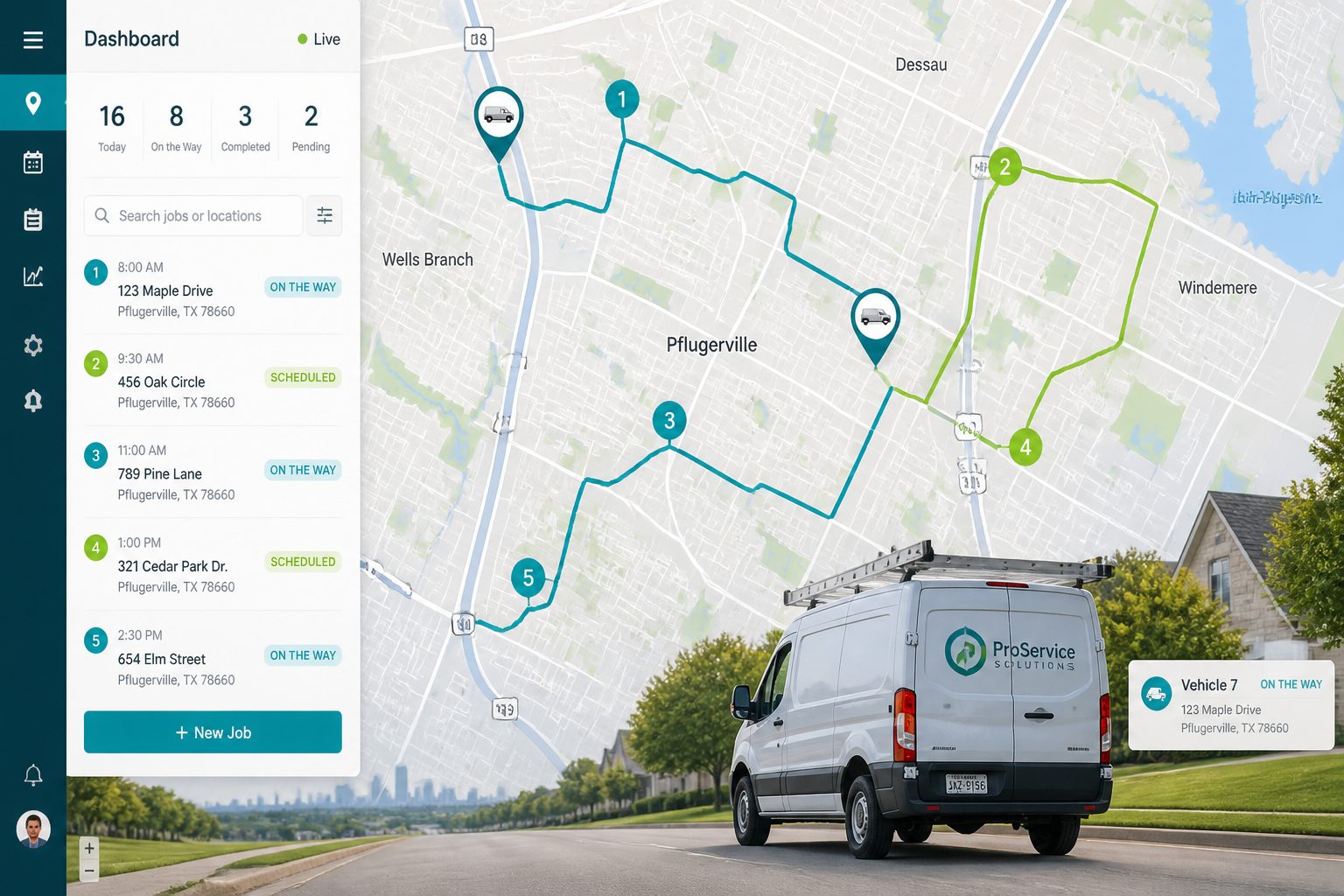
Technicians hear "GPS tracking" and assume surveillance. Owners hear it and think fuel savings. Both are missing the point. Location data earns its keep when it is used to protect the schedule and set honest customer expectations.
Three Legitimate Uses
- Dispatch decisions. When an emergency no-heat call comes in, you assign it to the closest available technician instead of the first name on the list.
- Customer ETAs. "Your technician is twenty minutes out" beats "sometime this afternoon" every time, and it cuts the not-home rate.
- Drive-time truth. If a route is scheduled for six stops but the drive time alone is three hours, the schedule was never realistic.
Route Optimization In Practice
JobOpsPro builds each technician's day as an ordered route with live drive times between stops. Change the order and the map redraws. Add a same-day call and the board shows which route absorbs it with the least disruption.
Optimization Strategies
Different days need different priorities:
- Shortest total drive time for a full maintenance day
- Earliest-window-first when time commitments were promised
- Skill match first when the day includes a commercial rooftop or a ductless install
Keeping The Field On Your Side
Be explicit about how location data is used, and keep it to working hours. Share the wins with the team: fewer wasted miles usually means fewer stops crammed into the last hour of the day. Technicians support tracking when it shortens their drive home.
Measuring The Return
Track three numbers before and after:
- Average drive minutes per completed job
- Stops completed per technician per day
- Percentage of calls arriving inside the promised window
Contractors who tighten routing usually recover the equivalent of a partial stop per technician per day. Across four trucks, that is a service call a day you did not have to hire for.
The Owner View
The dispatch board is the answer to "how is today going." Routes in green are on pace. Routes in amber are slipping. You do not have to interpret a map. You look at the board, see the one route in trouble, and move a single job.